
Automation engineering for machine builders, system integrators and manufacturers
PLC programming
Machine and cell programming across the platforms a production line contains in practice, written to the client's standard and structured so that it can be maintained by others.
Controllers
| Siemens | TIA Portal: S7-1500, S7-1200, ET 200SP and the S7-1500 Software Controller. STEP 7 Classic: S7-300 and S7-400, for retrofit work and lines not yet migrated. |
|---|---|
| Schneider Electric | PLC and HMI programming across Schneider's control platforms. |
| Rockwell / Allen-Bradley | Allen-Bradley controllers, for lines built to a Rockwell standard. |
| Safety controllers | F-CPUs and Profisafe, plus Pilz and SICK safety systems where the concept calls for them. |
| Something else | A controller that is not listed here is a question of documentation and preparation time rather than an obstacle. We are glad to discuss what the line runs. |
HMI, SCADA and traceability
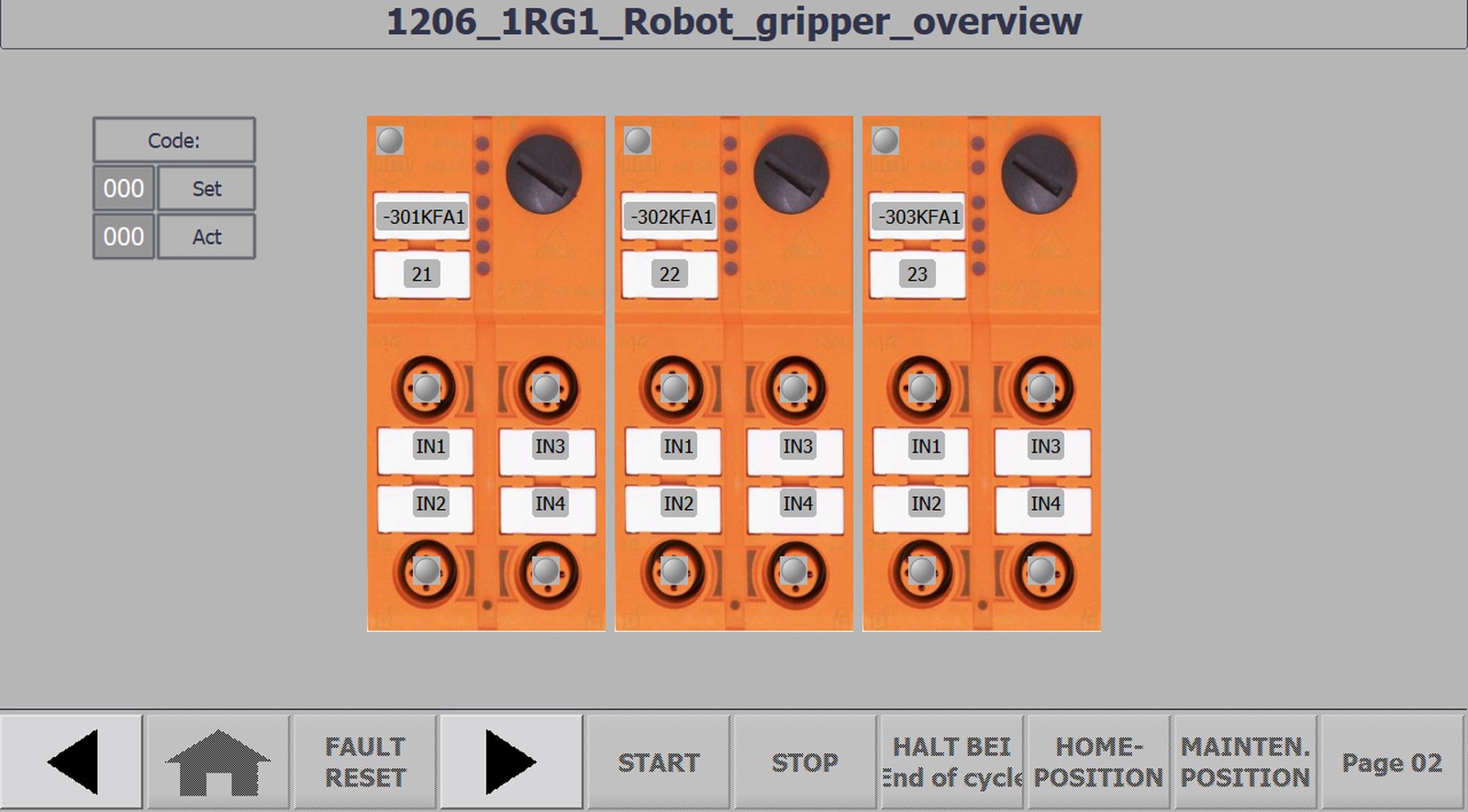
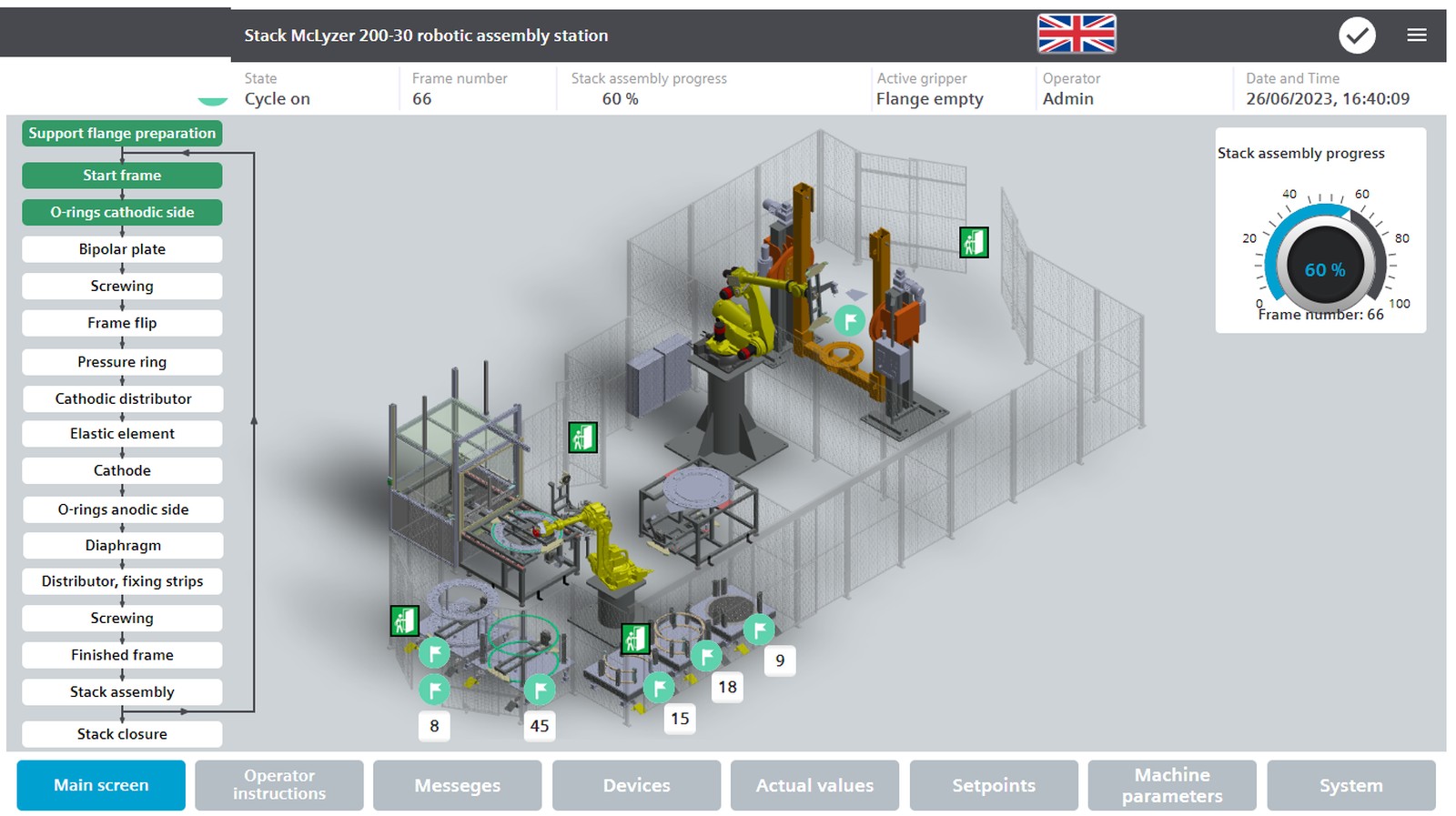
| Siemens | WinCC Comfort, WinCC Advanced and WinCC Unified; Comfort and Unified Comfort panels; operator-guidance screens on a second monitor where the process needs them. |
|---|---|
| Proface | Panel programming on Proface platforms. |
| Zenon | Process monitoring, traceability and data logging to plant systems. |
| Marking and ID | SIC marking systems, barcode and RFID, part traceability through the cell. |
Motion, drives and networks
| Servo and motion | Festo servo systems, SEW, Lenze and Siemens drives — positioning axes, independently controlled pads, indexing and rotary tables, conveyor control. |
|---|---|
| Vision and sensing | Cognex, Keyence, SICK and IFM — part presence, position correction, measurement and inline inspection. |
| Industrial networks | Profinet, Profibus, Profisafe, EtherNet/IP, Modbus, DeviceNet, CANopen, OPC UA and IO-Link. |
| Test and process | Leak testing, gluing and priming systems, flame treatment, welding controls, screwdriving and fastening units. |
What a program looks like when it arrives
A program bought from outside should remain maintainable by the people who live with the machine. Everything we deliver is written to be opened by the client's engineers, or by the end customer's maintenance staff, and understood without us.
- The client's house standard, library and naming convention, adopted as part of the work
- Consistent structure: clear separation of sequence, mode handling, interlocks, diagnostics and I/O mapping
- Reusable blocks with defined interfaces instead of copied-and-edited logic
- Recipe and variant management built in, so a new model does not mean a new program
- Alarm and message texts written in plain language, in the languages the plant actually uses
- Diagnostics built in from the start, so a stopped machine says why it stopped
- Commented at the level a maintenance technician needs in order to work on the machine
Typical work
- Complete machine programs for assembly, welding, bonding, screwdriving and handling cells
- Multi-variant assembly lines where the sequence adapts automatically to the model being built
- Rotary and linear indexing machines with multiple stations and independent station logic
- Servo-driven positioning: multi-axis punching, stamping and ergonomic part positioning
- Injection-moulding automation: part removal, insert feeding, downstream handling
- Control system retrofits — migrating S7-300 and S7-400 lines to S7-1500
- Safety programs and Profisafe integration for cells with robots and guarded access
- Traceability, marking, leak testing and data logging to plant systems